 BUY NOW, PAY LATER. Starting at 0% APR


New


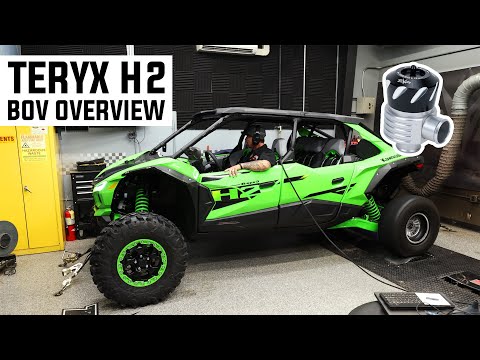
EVP Billet Boost Recirculating Valve (BRV) for Kawasaki Teryx H2
Don’t let boost leaks rob your ride of power! The EVP Billet Boost Recirculating Valve (BRV) for the Kawasaki Teryx H2 delivers unstoppable, leak-free performance. This BRV is engineered to operate consistently without leaks, maintaining extremely high manufacturing tolerances. The body, cap, and piston are precision CNC machined from billet aluminum with tolerances approaching 0.0003 inches. Sliding components are hard anodized and coated to ensure durability throughout the engine's lifespan. The EVP BRV incorporates three sealing o-rings to provide leak-proof operation, unlike the factory design. For each vehicle/engine type we make BRV kits for, the spring rates are properly matched for optimum performance.
- Best in the Dessert, Drag Race, and Short Course Race tested
- Tested to 500+ horsepower
- Simple Installation
- The body, piston and cap are machined from billet aluminum
- The cap is anodized and re-machined for easy gripping for spring tension adjustments
- The piston and body are hard coated with impregnated Teflon anti friction matrix
- Designed with three sealing o-rings for leak proof operation vs factory design having no sealing o-rings
- Prevent compressor surge, which leads to loss in performance and throttle response when the throttle closes then reopens at speed
- Does not have the "pshh" sound that some customers look to avoid
- Proudly machined and made in the USA
1502030001
$254.00
